

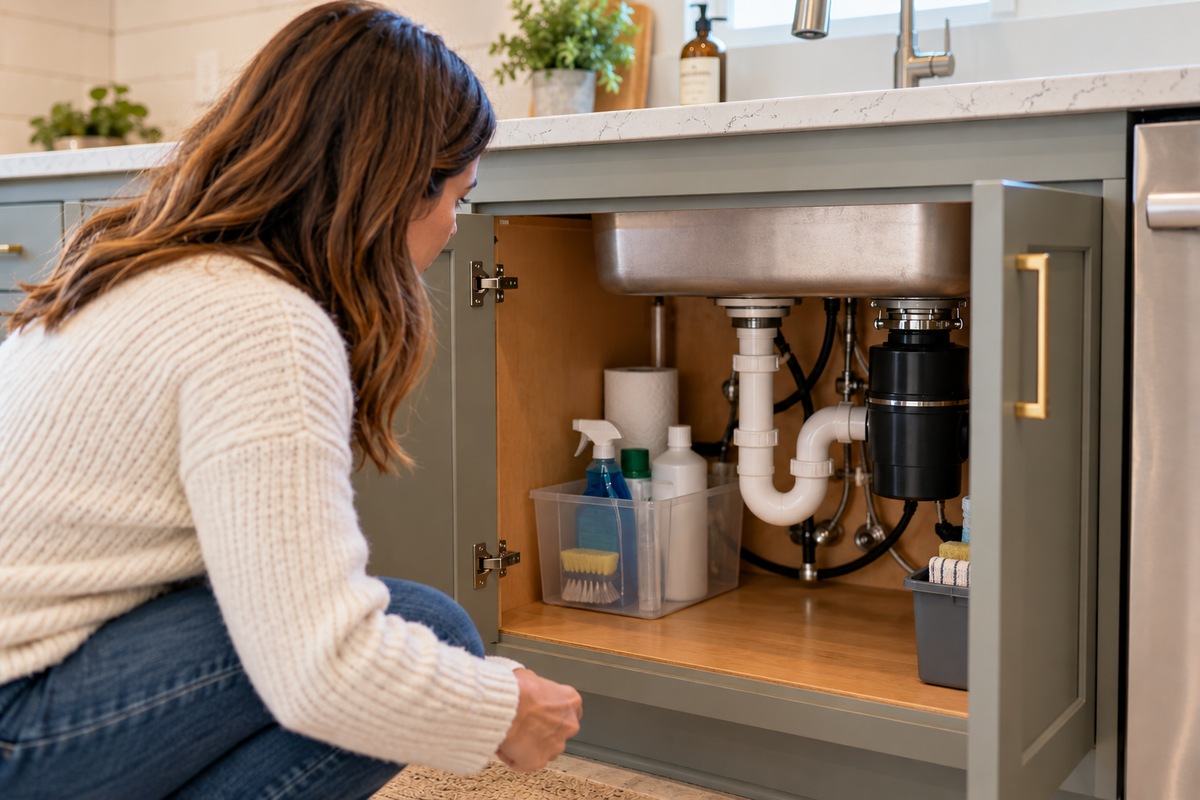
 When touring a home, buyers naturally notice countertops, faucets, and cabinet finishes. The spaces behind cabinet doors may receive far less attention. Yet the inside of a kitchen or bathroom cabinet can reveal useful clues about storage, plumbing access, moisture, and how well a room will function. A quick, respectful look can help you see beyond the staged presentation.
Start Under the Sinks
The cabinets beneath kitchen and bathroom sinks are especially informative because they contain plumbing connections. Look for water stains, warped cabinet bottoms, peeling surfaces, or signs of past repairs. A musty smell can be another reason to ask questions.
These clues do not automatically prove there is an active leak. A stain may be old and the problem may have been corrected. Still, visible moisture or deterioration deserves follow-up rather than an assumption that everything is fine.
Notice How Much Space Is Actually Usable
A cabinet may look spacious from the outside but lose much of its storage area to plumbing, garbage disposals, filters, or other equipment. Open the doors and picture where everyday items would go. Can you fit cleaning supplies under the sink? Are pots and pans easy to retrieve? Do bathroom drawers have enough clearance around pipes?
Cabinet depth and shelf placement can affect convenience more than decorative hardware. A deep lower cabinet without pullout shelves may be awkward to use, while a smaller cabinet with a thoughtful layout can be surprisingly practical.
Watch for Signs of Wear
Check whether hinges are secure and drawers open smoothly. Look for swollen particleboard, damaged corners, loose shelves, or doors that no longer align. These issues may be minor, but they can help you understand how much repair or replacement work could be ahead.
In bathrooms, repeated humidity can affect finishes and cabinet materials. Peeling laminate or swelling near a tub or shower may indicate that ventilation and moisture control deserve closer attention.
Think About Access for Future Repairs
Plumbing fixtures and shutoff valves should be reachable. A beautiful built-in arrangement can become inconvenient if it prevents easy access to a supply connection or trap. If the cabinet has been heavily modified, ask whether the changes were made for a particular appliance or plumbing upgrade.
Do not move personal belongings or dismantle fixtures during a showing. If a cabinet is blocked or a concern is difficult to inspect, ask your agent how to request access during an appropriate inspection period.
Use Your Observations Wisely
Cabinet interiors are not a substitute for a professional home inspection. They are an early opportunity to identify questions worth asking. If you notice dampness, unusual odors, or damaged materials, make a note and discuss them with your inspector.
A home does not need perfect cabinets to be a good purchase. But checking these overlooked spaces can help you better understand its condition, storage limitations, and potential maintenance needs before making a long-term commitment.
